
It’s easy to forget now, especially when most Deep Creek weekends are booked months in advance, and we have named November, March, and April the “shoulder seasons”, that there was a time when Garrett County didn’t really know how to benefit from winter weather. For a long while, the area was simple and predictable: people retreated to the mountains when the lake was warm, left when the leaves were gone, and the county waited it out until spring. As Lynn Beckman shared with me in an interview, “We had a basic summer economy here,” and for years, that was not only true, but it was also accepted.
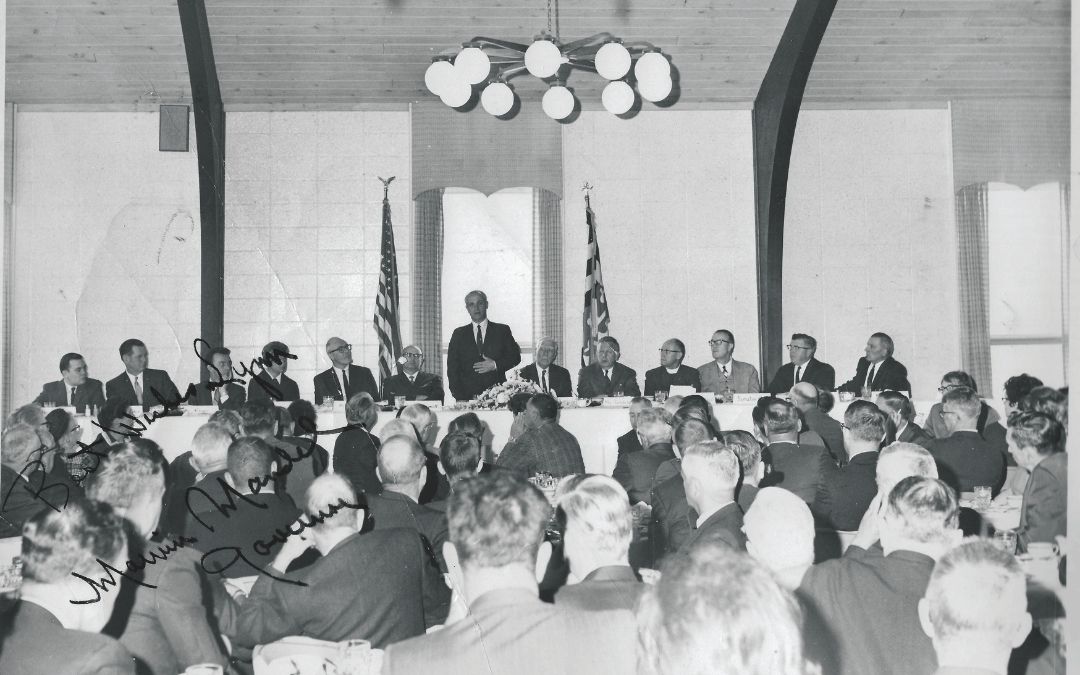
Lynn has seen many versions of Garrett County but was integral in shaping the early focus on four-season tourism in the late 1960’s as Executive Director of The Deep Creek Lake—Garrett County Promotion Council, Inc. When he talks about those early days, you can still hear how uncertain it all felt, because at that time, the idea that winter could be an asset rather than an obstacle wasn’t obvious at all. Snow, after all, is romantic only in hindsight.
That’s where Wisp enters the story, not as the polished, four-season ski resort we know today, but as a genuine leap of faith that forced the county as a whole to reconsider what was possible.
“Wisp was obviously a real boom for the winter season,” Lynn told me. Through the visionary leadership of founder Helmuth “Ace” Heise 70 years ago, Wisp Resort changed the economic and psychological calendar for the entire Western Maryland region.
The Promotion Council itself was also the result of Heise’s vision and ingenuity. The organization is recognized as a major factor in the early development and growth of tourism in the County. It spearheaded a concerted and organized functional effort to make the Mountaintop a recreational destination, and its membership included small businesses, County government, community leaders, and other organizations with a
common goal to create a viable tourism industry worthy of Garrett County’s attributes and opportunities.
Although the Council no longer exists as a stand-alone entity, it played a significant role during the county’s formative tourism years. It has since merged with the Garrett County Chamber of Commerce.
What really stands out in talking with Lynn about his experience, though, is his deep appreciation for Garrett County.
Lynn’s perspective on all of this is shaped in part by the fact that he didn’t just come across as a promoter, but as a communicator. Before the promotion council chapter of his life, he had worked as a broadcast journalist. “We already had all of the elements,” he told me. What was missing, in those early days, was the story that tied them together and the dedicated effort to put that story in front of the right people.
One of the places that the story took physical shape was in the traveling display the county used at sports and outdoor shows. Lynn remembers it in very specific detail; created by local talent Asa Stanton and Bill Reny (better known as William Renshaw from WMSG Radio) for the design and hand lettering.
The display itself was a kind of three-dimensional argument for the idea of four seasons before that phrase had fully taken hold. Summer, of course, was there. Fall was there too, framed around hunting and the county’s autumn beauty, long before there was any such thing as an Autumn Glory Festival. Winter was represented by Wisp, skiing, and ice fishing. Deep Creek Lake carried both recreation and investment, with Sky Valley standing in for what development could look like. Even spring had its place, promoted as the season for freshwater fishing in the lake and the mountain streams. And then there was the trout.
One of the most eye-catching parts of the whole display was a large, taxidermy-mounted trout that, at the time, held the Maryland state record for its species. The fish had been caught by Simon Cogley in the Red Run area of the lake and usually hung at Johnny Marple’s Bait House along Route 219 when it wasn’t on the road. For each travel show, Lynn would borrow the mount, load it up, and hang it on the display, a literal centerpiece meant to stop people in their tracks and start conversations.
Every year, the circuit of travel and sportsmen’s shows would culminate at a show in Cleveland, which was billed as the premier show for both the U.S. and Canada markets. It was the biggest by far, and also, in some ways, the most challenging. The crowds were large and curious, but they
were also skeptical, especially when it came to the idea of going south to ski.
Lynn remembers the comments vividly. “Oh, yeah, skiing in Maryland. Down south. Yeah. I’ll bet.”
That disbelief was hard, because Lynn was genuinely excited about the four season opportunityin Garrett County. In his opinion, where the Wisp stands now is — and has been — one of the quintessential four-season views in the county. There is the North-facing (thus, snow-holding) Marsh Mountain, amazing sunsets, forested hillsides, and sweeping Deep Creek Lake views from a single vantage point..
These stories are interesting, and they’re a reminder of how much of what we enjoy here today exists only because a few folks were willing to believe in it early.
To hear more from Lynn, in his own voice, including the stories that didn’t fit on these pages, you can listen to the full conversation on The Backbone podcast available on Apple, Spotify, and YouTube.
Photo caption: Governor Nandel at Wisp Resort on April 25, 1969.